What Science and Scripture Say About the Pen and the Healing Heart
The Blank Page
There is a particular kind of quiet that settles over a room when people open a journal for the first time. Pens hover. Someone clears their throat. Someone else glances around, wondering if everyone else already knows what to say.
I have watched that quiet many times. I have felt it myself. The blank page can feel like an empty chair at the table, a reminder of everything we have not said out loud.
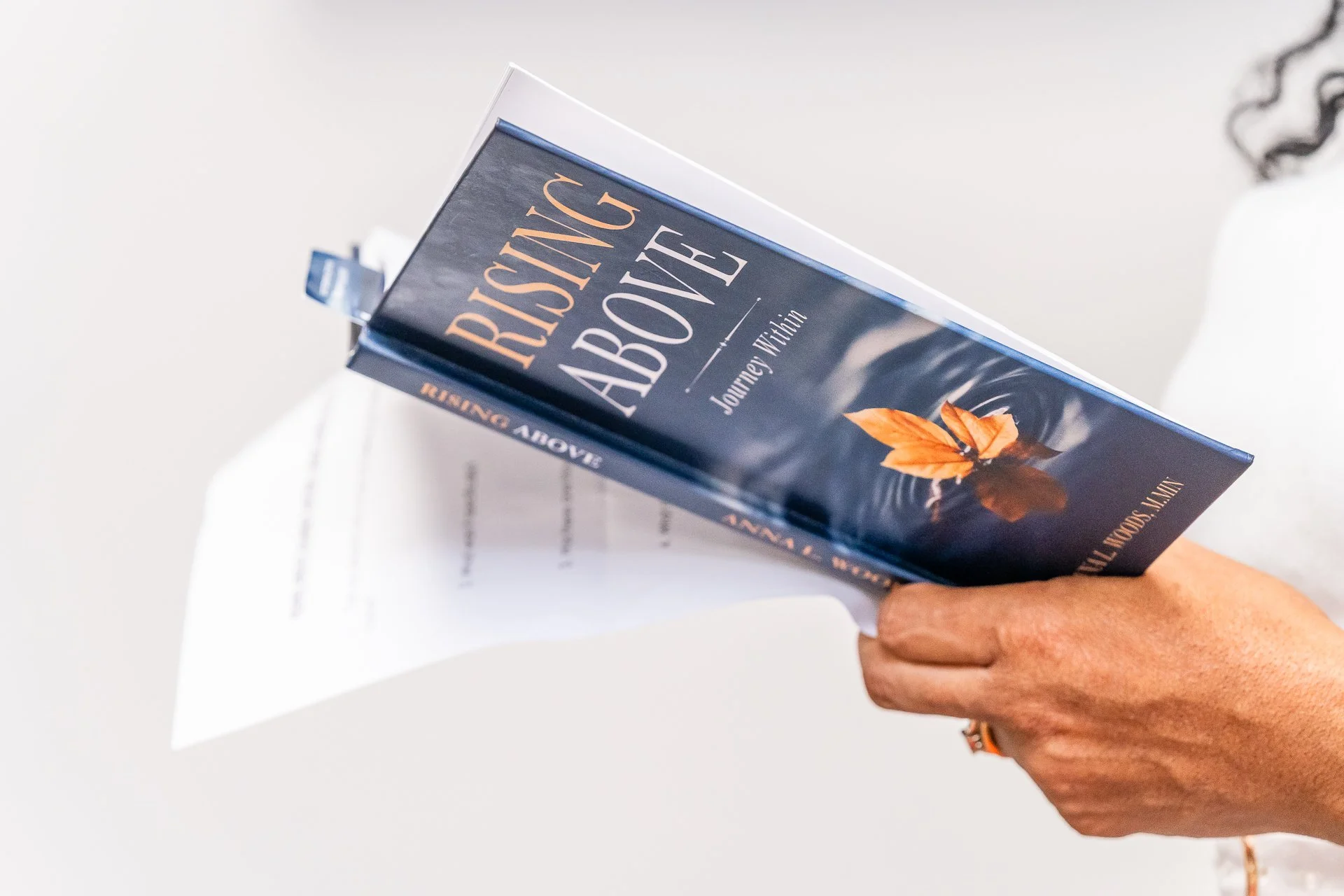
And yet, again and again, I have watched that same page become a place of release. A sentence turns into a paragraph. A tear lands on the ink. Something heavy gets set down. I am curious so I went looking for what science and Scripture say about why. What I found surprised even me, so I write in my journal, in blogs, and finally in my books. Slowing down to write and showing up is exactly what I needed. So I’m still writing!
Four nights in 1986
The modern story begins with a psychologist named James Pennebaker and a group of college students. In 1986, he asked some of them to write about the most painful experiences of their lives for 15 minutes a night, four nights in a row. Others wrote about ordinary, trivial things.
Then he waited. In the months that followed, the students who had written about their pain made fewer trips to the campus health center. Something as simple as putting hurt into words seemed to touch the body, not just the heart.
That small study opened a door. Researchers have since repeated the experiment hundreds of times. People who wrote about difficult experiences showed fewer doctor visits, stronger immune markers, better moods, and a greater sense of well-being. In 2006, researcher Joanne Frattaroli gathered 146 of these studies into one large review. Her conclusion was clear and honest: writing about what hurts genuinely helps, though the effect is modest. She also found that people carrying more distress often benefited the most.
Read that again, slowly. The ones carrying the most may receive the most.
From pouring out to making sense
Pennebaker did something else that I find beautiful. He studied the actual words people used. Those who improved most were not simply venting. Over the days of writing, they began using more words like because, realize, and understand. Their writing often started out tangled and grew clearer as they went.
In other words, healing seemed to come when people moved from raw feeling toward meaning. The page became a place not just to spill the story, but to make sense of it.
I want to be honest about grief, because grief deserves honesty. The research here is more mixed. Some studies found that grieving people who wrote did no better than those who simply let time pass. But other findings offer real hope. Writing seems to help most when it is focused and guided, rather than open-ended. One 2019 study of young adults who had lost a parent found that just 15 minutes of writing on three days lowered their grief. Another study found that writing about loss from a little distance, as if telling your story about "her" or "him" instead of "I," helped people stop circling the same painful thoughts.
Grief does not follow a formula. But a gentle, guided invitation to write can become one companion on the road.
Why I still reach for a pen
I often ask others to use pen and paper instead of their electronic device. Part of the journey is the feel of it. But part of it is what researchers are learning about the brain.
In 2024, scientists in Norway placed caps covered with 256 sensors on the heads of university students. Then they watched the students' brains as they wrote words by hand and as they typed them. When the students wrote by hand, many regions of the brain lit up and began talking to one another. Those connections are tied to memory and learning. When they typed, much of that conversation went quiet.
The researchers believe the difference comes from the careful shaping of each letter. Typing asks your finger to make the same small tap over and over. Handwriting asks your hand, your eyes, and your sense of touch to work together on every curve.
Years earlier, a study at Indiana University found something similar in five-year-olds. Children who printed letters by hand later used the brain's "reading circuit" when they saw those letters. Children who typed or traced the same letters did not.
In fairness, not every scientist agrees on how big this effect is. Some researchers have questioned how the Norwegian study was set up. A famous 2014 study claiming handwritten notes beat laptop notes did not hold up as strongly when it was repeated in 2019. And most of this research measures learning and memory, not emotional healing.
Still, here is what I take from it. Writing by hand slows us down. It invites more of us to show up. And when we are trying to work through something tender, slowing down and showing up may be exactly what we need.

God Said Write: And So I Did…
I've done my part, and now it's up to you to slow down, show up, and use the tools at your disposal. Write through your pain and engage with the books—let them guide you. Create a compassionate space for yourself, embracing both joy and grief simultaneously.
Consider, long before any laboratory, God was already telling His people to write things down. It is one of the quiet threads running through the whole of Scripture.
After Israel's victory over Amalek, the Lord told Moses, "Write this for a memorial in a book" (Exodus 17:14). Writing was a way to remember what God had done, so it would not slip away when the battle was over.
When the prophet Habakkuk waited on God in a season of confusion, the answer came: "Write the vision, and make it plain upon tables, that he may run that readeth it. For the vision is yet for an appointed time" (Habakkuk 2:2–3). Writing was a way to hold on to hope while waiting.
God told Jeremiah, "Write thee all the words that I have spoken unto thee in a book" (Jeremiah 30:2). He told Isaiah to note it in a book "that it may be for the time to come for ever and ever" (Isaiah 30:8). And in the final book of the Bible, John heard, "Write the things which thou hast seen, and the things which are, and the things which shall be hereafter" (Revelation 1:19).
The psalmist understood why it matters: "This shall be written for the generation to come: and the people which shall be created shall praise the LORD" (Psalm 102:18). Our written stories become testimony for people we may never meet.
And perhaps the most tender instruction of all comes from Proverbs: "Let not mercy and truth forsake thee… write them upon the table of thine heart" (Proverbs 3:3).
Notice the pattern. In Scripture, writing is remembering. Writing is making the vision plain. Writing is leaving a witness for those who come after. That is not so different from what the researchers discovered. Healing came when people moved from raw feeling toward meaning, and God has been inviting us to do that all along.
An invitation to pick up the pen
So here is my invitation to you. When I wrote Faith and Feelings: Embracing Our Humanity, I put it this way:
"Journaling or reflective writing can be a powerful tool for personal growth and emotional well-being."
The research and the Scriptures above only deepen my conviction. Here is how I encourage people to begin.
How to begin
Choose a medium. A notebook, a journal, or a digital platform can all work. But as I wrote in the book, "Handwritten journals have unique benefits, enhancing the overall experience and fostering greater self-discovery." The brain research on handwriting tells the same story.
Set a time. Daily, weekly, or whenever you feel the need. The original studies used just 15 to 20 minutes over a few days.
Find a quiet space. Choose somewhere peaceful, where you can reflect without distraction.
Begin with a prompt. Prompts give your writing a direction, and the grief research suggests focused, guided writing helps most.
Write freely. Let it flow without editing yourself. Grammar and structure do not matter here.
Six ways to journal
There is more than one way to meet yourself on the page. Each of these connects to something the research or Scripture has already shown us.
Gratitude journaling. List what you are thankful for each day, nurturing positivity and well-being.
Reflective journaling. Write about your experiences and what you learned. This is the meaning-making Pennebaker saw in people who healed.
Emotional journaling. Dive into feelings like anger, sadness, or joy. This is the heart of the expressive writing studies.
Timeline journaling. Keep a historical account of your life to look back on. Like Moses' "memorial in a book," it lets you remember what God has carried you through.
Art journaling. Add drawings, doodles, or collage. More of your senses and your hand get involved, not just your words.
Themed journaling. Focus on one topic, such as forgiveness, growth, or wellness, to direct your reflection and find deeper insight.
A few gentle things to know
You might feel a little heavier at first. Many people feel sad right after writing, especially on the first day. That is normal, and it usually passes.
Your words belong to you. You can keep them, tear them out, shred them, or burn them. The healing is in the writing, not in saving it.
Writing is a companion, not a cure. If your pain feels overwhelming or does not ease, please reach out to a counselor, a pastor, or a trusted friend.
Your prompt
Set a timer for 15 minutes. Before you begin, hold on to this instruction from Faith and Feelings:
"Allow your thoughts to flow without self-editing. The goal is to express yourself authentically, so don't worry about grammar or structure."
Then write your way through this question:
What have I been carrying that I have not said out loud? What might God want me to remember about it?
When the timer ends, read your words back slowly. Notice any place where a little clarity broke through.
The blank page is not empty. It is waiting. Write the vision. Make it plain. And trust that what you put down in ink may one day become a testimony for someone else.
Leading from the inside out,
Coach Anna
Anna L. Woods, M.Min, CCP, Author
October is recognized as National Depression and Mental Health Screening Month (also known as Depression Awareness Month) to reduce stigma, educate the public, and encourage mental health support.
Fast Facts
Around 1 in 5 U.S. adults and 1 in 6 to 7 youths experience a mental health condition each year.
Organizations like Mental Health America and The Harris Center for Mental Health and IDD provide educational resources, screenings, NAMI.Org and local community events throughout the month. [1, 2, 3, 4]
A Note on Scope: Our coaching services provide guided reflections and community support rooted in faith and a holistic approach. However, they are not a substitute for licensed therapy or medical care. If you're in crisis, please call or text the National Suicide & Crisis Lifeline at 988, available 24/7.
References
Frattaroli, J. (2006). Experimental disclosure and its moderators: A meta-analysis. Psychological Bulletin, 132(6), 823–865. PubMed
James, K. H., & Engelhardt, L. (2012). The effects of handwriting experience on functional brain development in pre-literate children. Trends in Neuroscience and Education, 1(1), 32–42. PMC
Morehead, K., Dunlosky, J., & Rawson, K. A. (2019). How much mightier is the pen than the keyboard for note-taking? Educational Psychology Review. DOI
Pennebaker, J. W., & Beall, S. K. (1986). Confronting a traumatic event. Summarized at Psychology in Action
Pennebaker et al. (1997) on causal and insight words. Summarized at Penn State, Emotion Regulation
Pinet, S., & Longcamp, M. (2025). Commentary on Van der Weel & Van der Meer. Frontiers in Psychology.Frontiers
Savitri, S. I., et al. (2019). Expressive writing changes grief into meaning. COUNS-EDU, 4(3). DOAJ
Van der Weel, F. R., & Van der Meer, A. L. H. (2024). Handwriting but not typewriting leads to widespread brain connectivity. Frontiers in Psychology, 14, 1219945. Frontiers
Woods, A. L. (2026). Faith and Feelings: Embracing Our Humanity (2nd ed.).
Woods, A.L. (2026) Rising Above Journey Within
Zhou, N., et al. Can self-distancing benefit adjustment to bereavement? University of Oxford
Review of bereavement writing research: Omega, letter writing in grief therapy
Scripture quotations are from the King James Version (public domain).