WHAT WE SILENCE, WE STORE

Adapted from Chapter One of Rising Above: Journey Within
What we silence, we don't heal — we store. And what we store, we eventually hand down.
Have you ever grieved someone who is still alive?
That someone might have been you.
I ask that question every time I stand up to speak about identity loss, before I ever say hello. I don't explain it right away. I've learned that a real question does more work in silence than any introduction ever could.
Here's what I've come to believe, standing in front of rooms full of strangers who somehow all recognize themselves in that one sentence: every one of us has lost something, silenced something, or been shaped by someone who wasn't supposed to leave a mark the way they did. It doesn't matter how old you are or how put-together your life looks from the outside. Somewhere along the way, most of us traded a piece of who we were for a version of ourselves that felt safer to be.
That's identity loss. For a long time, I didn't have a name for what had happened to me. I only had three words, once I finally found them: silence, grief, and release.
Silence

I'll start where I started, in the silence.
So where does identity loss begin? For most of us, it isn't one dramatic moment. It's a childhood taught to silence what it felt. A caregiver who couldn't show up the way we needed.
A grief nobody ever helped us name. Years carried alone because community felt too risky to reach for. Layer by layer, we stop asking what we feel and start asking what's expected of us until the woman underneath the role goes quiet.
For me, that shape got poured early. It sounded like this:
“Be seen, not heard.”
“Sit down.”
“Be still. Be quiet.”
“Go outside.”
I heard those words so many times as a little girl that I didn't just learn to be quiet I learned that quiet was who I was. Compliance felt safe. Vulnerability felt dangerous. And somewhere in there, I lost track of a little girl's real feelings, and I picked up a role instead.
When you're taught early that your feelings are inconvenient, you don't stop having them. You just stop showing them. I became very good at that. On the outside: composed, capable, fine. On the inside: unspoken pain, bottled up, festering quietly for years.
Nobody tells you that unexpressed emotion doesn't disappear just because you stopped talking about it. It moves. It moves into your body. Into your sleep. Into your relationships. For me, it eventually moved into a panic attack — my first one — that arrived like a stranger in my own chest and forced me to ask a question I had been avoiding for years:
How can I be spiritually healthy while I'm carrying wounds I have never once looked at?
Maybe you're sitting with that same question right now. Maybe you were the “strong one” in your family. Maybe you learned that tears made people uncomfortable, so you stopped crying in front of anyone. Hear me: our feelings are not a threat to our faith. They are evidence of God's image in us. Jesus wept at Lazarus's tomb. Jesus turned over tables in righteous anger at the money changers. Grief and anger, in the hands of Jesus, were not sin — they were sacred. If the Son of God could feel deeply and still be perfectly holy, then maybe — just maybe — our tears were never the problem. Our silence was.
What we silence, we don't heal — we store. And what we store, we eventually hand down.
I didn't just carry my silence — I was on my way to handing it to the people I love as an inheritance I never intended to give. That's what identity loss does when it goes unaddressed. It doesn't stay contained to one generation, and it doesn't stay contained to one person. It spreads quietly, the way all untreated things do.
But silence buries things. It doesn't erase them. And what's buried can still be grieved.
Grief
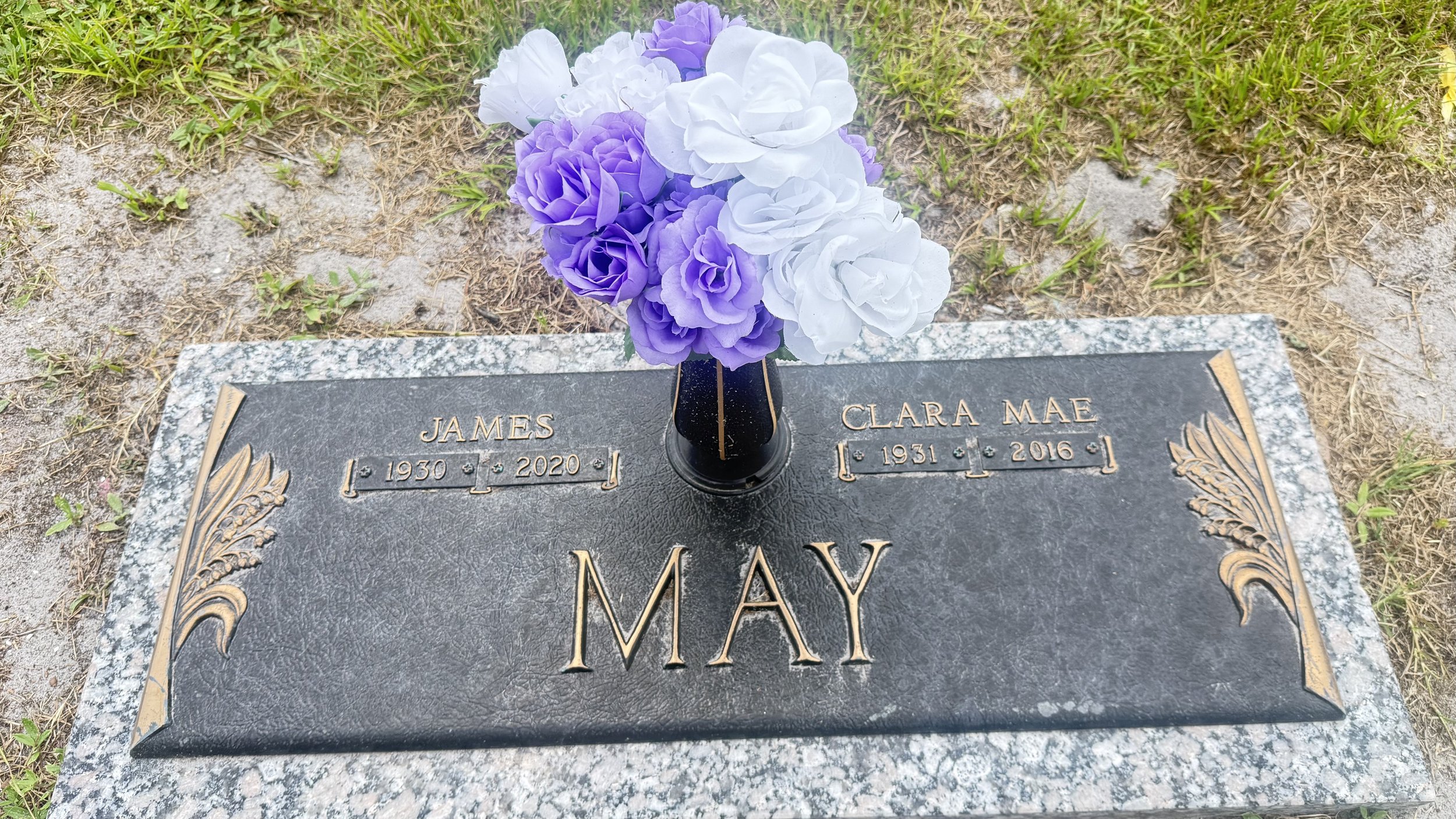
Which brings me to the second word: Grief.
Most of us think grief belongs only to death, or maybe divorce — the losses people send casseroles for. But grief is bigger than that, and narrowing it keeps us from ever actually processing it.
Photo: Dad & Mom’s Gravesites Melbourne , Fl.
Grief also lives in the relationship that quietly ended. The transition that left you unmoored. The dream you abandoned because it stopped feeling safe to want it. The opportunity that passed and never came back around. All of that is grief, even when nobody brings you a meal for it.
Here's why these matters: when grief goes unnamed, it doesn't go away — it turns into rumination. Constant replaying, blame, stuck thinking, a low hum of stagnation you can't quite explain. You don't feel like you're grieving. You just feel like something's wrong with you. But when we recognize the fuller scope of grief, we can finally take our pain seriously, process it honestly, and let it become something other than a loop we live inside.
I've had plenty of grief that came with a name — a divorce, people I loved and buried, a near-death experience that stripped away every illusion that I was in control of my own story. There were seasons where I cried out the way David did in the Psalms:
“Deep calls unto deep at the noise of Your waterfalls; all Your waves and billows have gone over me.” — Psalm 42:7
That is not a polished prayer. That is a drowning man's prayer. And God met me in it anyway. The author Richard Rohr calls what happens next “the awakening of the soul” — suffering, faced rather than avoided, becomes a teacher instead of a punishment. I didn't believe that the first time I heard it. I believe it now, because I have grieved my way into it.
Grief isn't reserved for what you buried in the ground. It's for every version of you that quietly disappeared along the way. Name it, and it stops running your life from the shadows.
So here's the permission I want to hand you, the one I had to give myself first: you're allowed to grieve the version of you that got left behind. You're allowed to grieve quietly, without a funeral, without anyone else understanding why it still hurts. Naming it isn't weakness. It's the first honest step toward putting it down.
Release
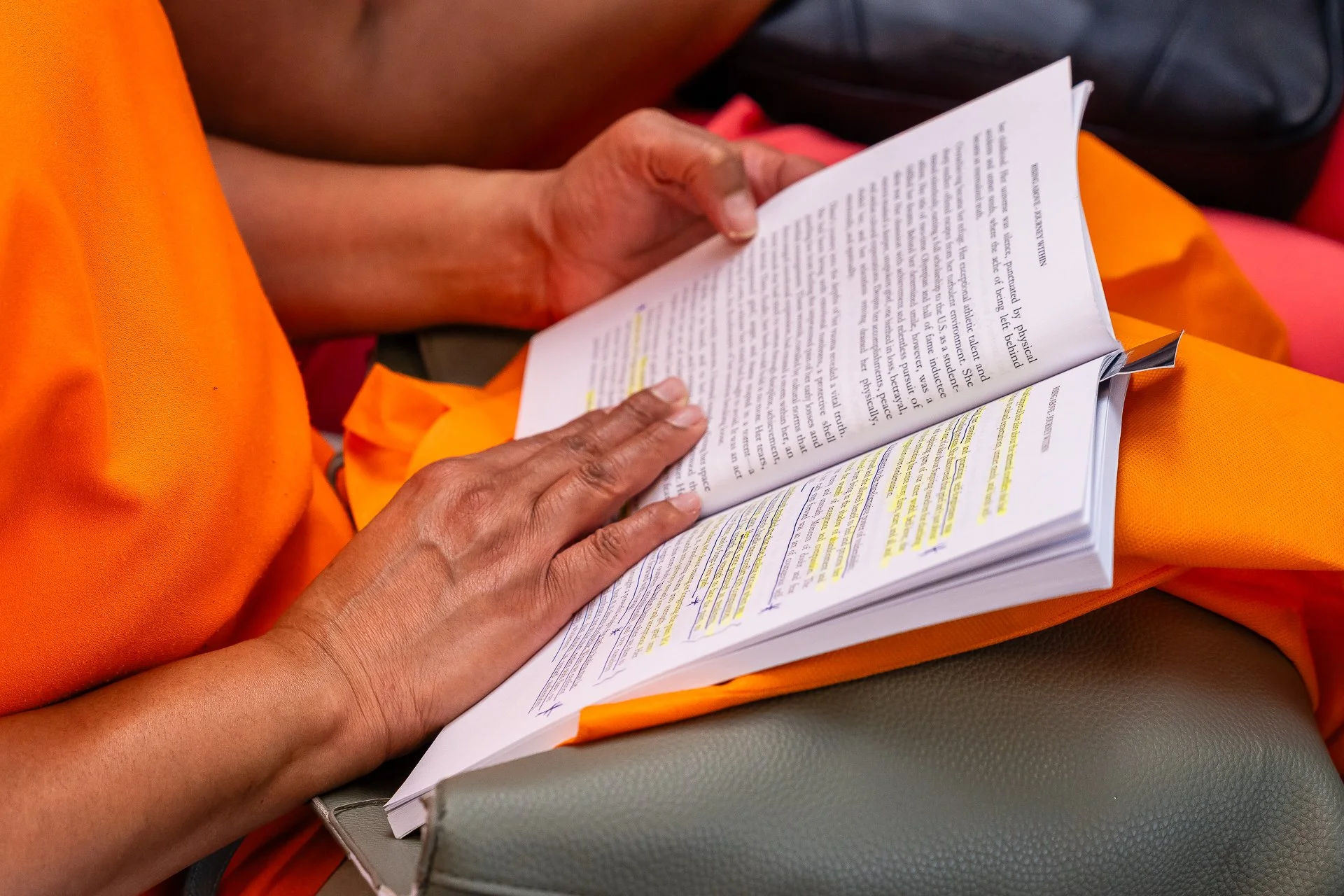
So, we've named the silence. We've let ourselves grieve what was lost. Now comes the hardest work of the three: Release.
I want to give you my own definition of healing, the one I wrote in the first chapter of my book, because I believe it belongs to you too:
Healing is the process of restoring wholeness physically, emotionally, mentally, and spiritually by addressing our wounds, releasing our pain, and embracing growth. It is not just the absence of suffering. It is the presence of acceptance, forgiveness, and grace, moving us from hurt to hope, from brokenness to wholeness.
Notice release is in there not as an afterthought, but as the engine. And release isn't passive. I don't want you to walk away from this thinking healing just happens to you while you wait quietly. Scripture is clear: we are saved by grace, not by works that's Ephesians 2:8-9. But James reminds us that faith without works is dead. Releasing what no longer serves you is not a feeling you wait to have. It's a decision you make, and then a series of small, deliberate actions that follow it counseling, community, a walking group with people who tell you the truth, prayer and reflection practiced on purpose, not just when you fall apart.
I discovered this the hard way: release was never meant to happen in isolation. I had church my whole life I'm grateful for that foundation, but I still felt alone in the specific ache of my story, because faith community and emotional honesty aren't always the same room. So, I went looking for kindred souls beyond the walls I already knew. What I found, and what research confirms, is this: community isn't a nice add-on to release. It reduces isolation, provides accountability, lowers our stress biologically, and reminds us of we're not the only ones carrying what we carry.
What no longer serves you doesn't need your permission to leave. It only needs your hands to open.
Where I Landed

Before you go, I want to give you the same moment I give every room I speak to.
Close your eyes if you're comfortable, and simply name, silently, one thing you are ready to release. Maybe it's a role you've outgrown. Maybe it's a grief you've never let yourself call by name. Maybe it's a silence you've kept so long you forgot it was a choice and not just who you are. You don't have to say it out loud. Just name it, and let your hands open, right here, in the presence of a God who already sees it.
I'm not going to tell you who you're becoming that's not mine to say, and better voices than mine can walk you through it. My only job was to help you name what's been silenced, grieve what's been lost, and open your hands enough to release it. That's it. That's enough for one door.
So, let's remember our three words, together, one more time:
Silence — what we silence, we don't heal, we store, and what we store, we hand down.
Grief — grief isn't reserved for what you buried in the ground, it's for every version of you that quietly disappeared. Name it, and it stops running your life from the shadows.
Release — what no longer serves you doesn't need your permission to leave. It only needs your hands to open.
Hold what's next with open hands. I have a feeling you're about to find out what waits on the other side of release.
IF THIS STORY MET YOU SOMEWHERE
Adapted from Chapter One of Rising Above: Journey Within
Silence, grief, and release are only the beginning. I wrote the fuller story — mine, and the framework I use to help others walk theirs — in my book.
Thank you Enough Inc. Yolanda Frazier for the privilege to speak at Transformation of Me.
Rising Above: Journey Within
#IdentityLoss #RisingAbove #FaithAndHealing #ChristianWomen #GriefJourney